He that turneth away his ear from hearing the law, even his prayer shall be abomination. This verse reminds us that listening to God’s instruction matters—when we ignore His ways, our prayers lose their right standing. Obedience and a humble heart keep our relationship with God honest and effective.
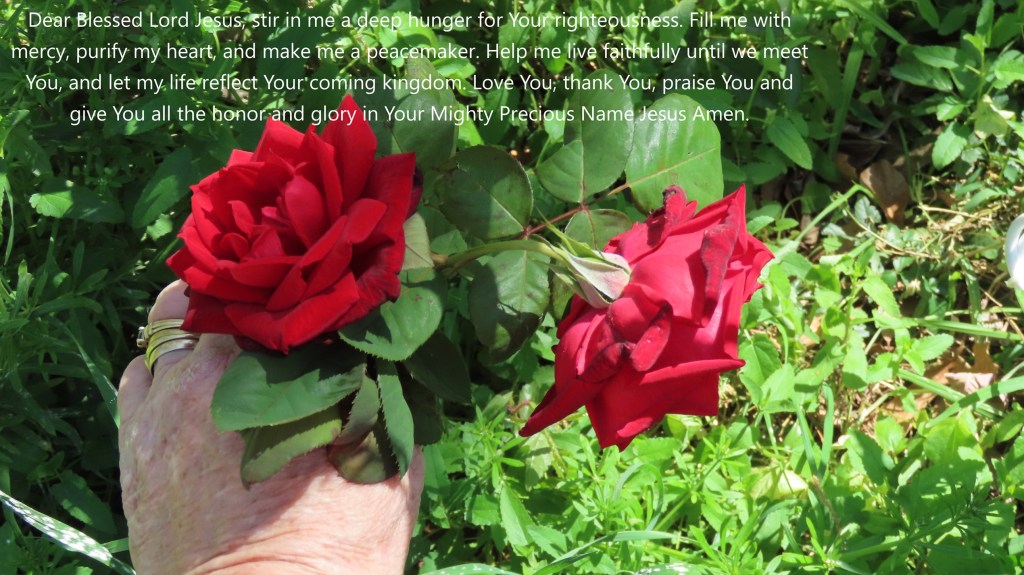
Father God, open our ears to Your truth and soften our hearts to obey. Remove pride and distraction that keep us from hearing You. Restore the purity of our prayers and lead us in paths of righteousness so our lives honor You. Love You, thank You, praise You and give You all the honor and glory in Jesus Precious Name Amen.
Because thou hast made the LORD, which is my refuge, even the most High, thy habitation; There shall no evil befall thee, neither shall any plague come nigh thy dwelling. For he shall give his angels charge over thee, to keep thee in all thy ways. – Psalms 91:9-11: May these verses of promise bring you peace, protection, and comfort today. Have a wonderful, blessed day.
A rustic parchment displays a comforting biblical blessing from Numbers 6:24-26.
For our light affliction, which is but for a moment, worketh for us a far more exceeding and eternal weight of glory; While we look not at the things which are seen, but at the things which are not seen: for the things which are seen are temporal; but the things which are not seen are eternal. – 2 Corinthians 4:17-18
These are beautiful verses invite us to reframe suffering: our present troubles are temporary and are preparing us for an incomparable, eternal glory; therefore we are called to fix our eyes on the unseen realities of God rather than on passing circumstances. Paul writes from the perspective of a suffering servant who sees present affliction as purposeful and temporary, working toward an eternal result that far outweighs current pain. The contrast Paul makes seen versus unseen shifts attention from transient circumstances to lasting spiritual realities, encouraging perseverance and hope. Light and momentary affliction does not deny real pain; it reframes it as limited in duration and instrumental in shaping character and hope. Eternal weight of glory points to a future reality so great it dwarfs present suffering; Paul’s language is deliberately paradoxical to lift our perspective beyond immediate hardship. Fixing our eyes on the unseen is a spiritual discipline: prayer, Scripture, and community help us rehearse the unseen truths (God’s promises, Christ’s victory) so the visible troubles lose their final authority.
Name the affliction, acknowledge pain honestly in prayer and with a trusted friend.
Rehearse the unseen, read Scripture that affirms God’s promises and write one sentence of hope each morning.
Small faithful acts, serve, give, or worship even when discouraged; these actions embody trust in the unseen.
Remember the timeline, remind yourself that “momentary” is relative to eternity; this helps reduce despair.
What specific trouble feels overwhelming right now?
How would seeing that trouble as temporary change your response?
Which unseen promises of God can you rehearse this week?
Warnings and realistic limits! Don’t spiritualize pain away. Saying suffering is “for your good” must never silence grief or avoid practical help. Seek counseling or medical care when needed. Avoid toxic positivity. Fixing eyes on the unseen is a discipline, not a demand to ignore emotions. Closing encouragement, Hold the tension: feel the pain, but refuse to let it define your story. Paul’s promise is not a quick fix but a horizon, one that gives meaning and endurance to today’s trials.
Father God, help me remember that my troubles are temporary and Your glory is eternal. Lift my eyes from what I see to what is unseen and strengthen my heart with Your hope today. Love You, thank You, praise You and give You all the honor and glory in Jesus Precious Name Amen.
May that promise encourage and strengthen you today.
A lone hiker walks a rugged mountain path under dramatic storm clouds. Could be Paul.
Archangels fiercely confront a menacing dragon amid heavenly clouds. Powerful verses depict Michael and his angels defeating the dragon, a vivid image of evil’s defeat and the assurance that justice and truth ultimately prevail. Michael is portrayed in Scripture as a high‑ranking angelic commander who acts under God’s authority in cosmic and covenantal moments. He appears in Daniel as a protector figure for God’s people and in Revelation as the leader who defeats the dragon (Satan) in heaven. Spiritual warfare is real but delegated. Many interpreters see Michael’s role as part of God’s sovereign governance of spiritual forces; God delegates authority to angels but also works through human institutions and conscience to bring about justice. God is the final judge. The Bible repeatedly affirms that ultimate judgment belongs to God; believers are called to trust God’s justice while acting responsibly in the world. Michael’s victory in Revelation is a powerful assurance that evil will not have the last word; it’s a cosmic promise that complements, rather than replaces, our human responsibility to pursue justice and care for one another. Michael appears in Scripture as a high‑ranking heavenly warrior who acts in decisive, cosmic moments; the Bible does not teach that he routinely executes human‑level justice for every dishonest person, God is the final judge, and believers are called to pursue justice, pray, and seek wise, practical remedies. Daniel 10; 12:1 — Michael is described as a protector and prince who assists in spiritual conflicts concerning God’s people. Jude 9 — Michael disputes with the devil and defers to the Lord’s rebuke rather than pronouncing judgment himself. Ephesians 6:12; Hebrews 1:14; Psalm 91:11 — Teachings about spiritual forces, ministering angels, and God commanding angels to guard people. Revelation 12:7–9 — Michael defeats the dragon in an apocalyptic vision, signaling Satan’s defeat and expulsion from heaven.
Pursue justice responsibly. Use legal channels, community resources, and wise counsel when facing dishonesty or harm.
Seek reconciliation where possible. Confront with humility, document facts, and aim for restoration when safe and appropriate.
Pray and ask for wisdom. Many traditions encourage prayer for protection, discernment, and for God to restrain evil.
Support systems that protect others. Advocate for transparency, accountability, and institutions that deter dishonesty.
And there was war in heaven: Michael and his angels fought against the dragon; and the dragon fought and his angels, And prevailed not; neither was their place found any more in heaven. And the great dragon was cast out, that old serpent, called the Devil, and Satan, which deceiveth the whole world: he was cast out into the earth, and his angels were cast out with him. – Revelation 12:7-9
Father God, give me wisdom to act rightly, courage to pursue truth, and patience to trust Your justice. Protect those harmed and guide the steps toward restoration. Command Your angels to guard us; give discernment to see deception and the strength to respond in love and truth. Love You, thank You, praise You and give You all the honor and glory in Jesus Precious Name Amen.
A beautiful, comforting image to imagine loved ones as angels watching over us, but the Bible consistently teaches that humans do not become angels after death; believers will be glorified humans who, like angels, will not die.
As ye have therefore received Christ Jesus the Lord, so walk ye in him: Rooted and built up in him, and stablished in the faith, as ye have been taught, abounding therein with thanksgiving. Beware lest any man spoil you through philosophy and vain deceit, after the tradition of men, after the rudiments of the world, and not after Christ. – Colossians 2:6-8
This is a rich and steadying passage to carry into the day, Paul at his most pastoral and protective, urging believers not just to believe in Christ, but to walk in Him, to let their whole life take its shape from Him. The movement of the text is beautiful: Faith isn’t a moment; it’s a way of living. Paul mixes metaphors, a tree, a building, a disciple, all pointing to a life that becomes stronger, deeper, and more stable over time. Gratitude isn’t an accessory to faith; it’s evidence of spiritual health. Then comes the warning, gentle but firm: Don’t let anyone spoil you (literally “take you captive”) Don’t be pulled off course by hollow philosophies, human traditions, or worldly systems. Because anything not anchored in Christ ultimately empties rather than fills It’s a reminder that spiritual drift rarely looks dramatic. It often begins with subtle substitutes, ideas that sound wise but lack the life of Christ. There are several passages lately that circle around the same theme: walking wisely, staying awake, living with reverence, holding fast to what is true. It’s a thread of spiritual attentiveness that fits a ministry voice so well, grounded, watchful, grateful. Just as Jesus walked the earth after Easter, teaching, comforting, opening eyes, strengthening faith, He still walks with us now. Wishing you a peaceful, steady day rooted in Jesus Christ.
Behold, I stand at the door, and knock: if any man hear my voice, and open the door, I will come in to him, and will sup with him, and he with me. To him that overcometh will I grant to sit with me in my throne, even as I also overcame, and am set down with my Father in his throne. – Revelation 3:20-21
This is a vivid image of Christ’s invitation to intimate fellowship and the promise of shared authority for those who persevere. It pairs the personal, knocking, sup with him, with the cosmic, sitting on his throne, reminding us that closeness with God carries both comfort and hope. If you want, I can offer a short devotional reflection, historical context, or a plain‑language explanation of the symbolism.
“Knock At The Browser Door”
A knock at midnight on a browser door, tabs like rooms where quiet prayers keep score. One tab: a face of friends and whispered psalms, another holds a draft of hope in trembling palms.
He stands and waits where HTML meets heart, inviting supper, asking us to start. Click open, let the small light flood the room; share bread, share throne, let shadow yield to bloom.
To those who rise and answer, seats are given, soft crowns of mercy, and a place in heaven. So let your pages open, one by one, and sit with him until the work is done.
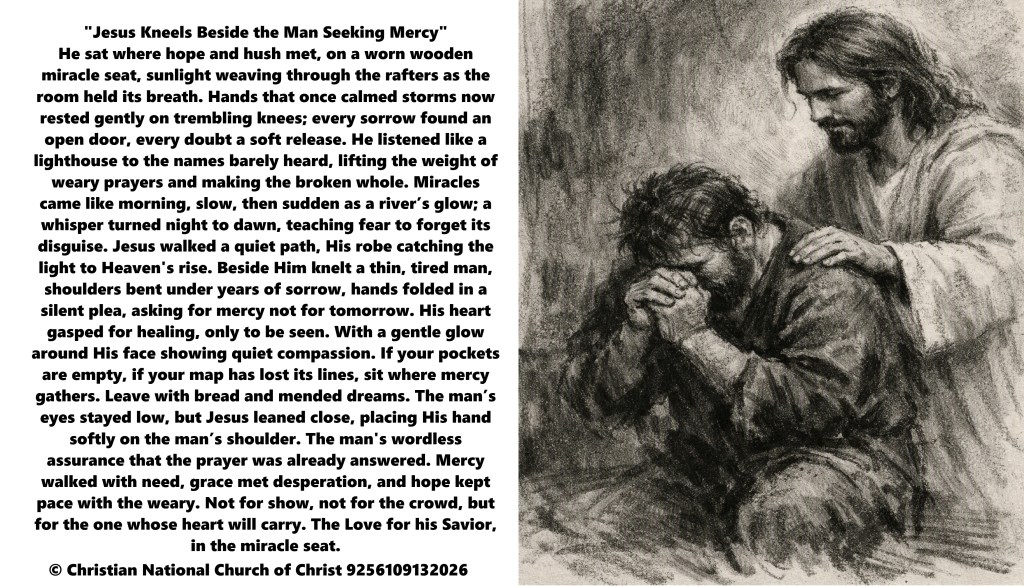
Kneel on the floor, blessed Father, Son and Holy Spirit. Hear my humbled prayers as gratitude, love, humility holds His merits.
Kneel on the floor, blessed Father, Son, and Holy Spirit. Hear these humbled prayers offered in gratitude, love, and humility.
May Your mercy rest upon us, Your, presence fill our rooms, and Your peace keep our hearts until morning bringing us new light.
When Jesus says the Spirit is our Helper, He isn’t just helping us do good, He helps us want good, choose good, and grow into good. When you ask the Holy Spirit for help, what do you usually hope He will help you with, strength, wisdom, peace, or something else? When Jesus says, “without Me ye can do nothing,” He isn’t scolding, He’s describing how life flows. A branch doesn’t strain to make fruit; it just stays connected. “Fruit grows where fellowship stays. ” When you read “abide in me,” what picture comes to your mind, resting, obeying, staying close, or something else? “I rest on my knees even when it hurts, because my heart is heavy and I want to pour my heart out to God, losses, people who need healing, asking Him why I have to go through the hard stuff. “Not peaceful, not poetic, not strong, just showing up wounded and still choosing Him. A branch doesn’t cling because it feels good. It clings because it has nowhere else to live. Kneeling with a hurting heart is not weakness; it’s the deepest form of abiding. It’s saying, “I don’t understand, but I won’t walk away. ”The release of giving Him it all and asking for forgiveness if I have sinned through the day without knowledge. “that’s what abiding actually looks like. Not perfection. Not certainty. Not having the right words. Just letting go of what you carriedand trusting that God receives it without hesitation.
I am the vine, ye are the branches: He that abideth in me, and I in him, the same bringeth forth much fruit: for without me ye can do nothing. If a man abide not in me, he is cast forth as a branch, and is withered; and men gather them, and cast them into the fire, and they are burned. If ye abide in me, and my words abide in you, ye shall ask what ye will, and it shall be done unto you. – John 15:5-7
Sometimes the deepest asking happens in silence, not because God needs it, but because your heart is already touching His. Without realizing it, I’ve been describing this: kneeling even when it hurts, pouring out losses, carrying those who need healing, asking “why,” letting go of everything, seeking forgiveness for what you didn’t even notice. That is abiding. That is asking. That is prayer. When you pray without words like that, does it feel more like God is listening, or more like you can finally breathe? The mouth reaches the heart whether it’s open or speaking straight from the heart. God hears the source of the prayer, not its sound. Whether your lips move or stay still, whether your voice is strong or just a whisper, it’s your heart that reaches Him. Ye (you) shall ask what ye will, and it shall be done unto you.
Jesus said unto her, I am the resurrection, and the life: he that believeth in me, though he were dead, yet shall he live: And whosoever liveth and believeth in me shall never die. Believest thou this? She saith unto him, Yea, Lord: I believe that thou art the Christ, the Son of God, which should come into the world. – John 11:25-26
He is Risen! He is risen! The stone rolled back, the dawn unsealed, light spilling like a promise over sleeping graves. Where sorrow sat, a quiet joy now takes its place, and every shadow learns the shape of grace. The tomb gave up its silence to a voice of peace, and hearts that feared the night find courage to believe. Broken things are mended by a mercy fierce and kind, and hope, once buried, rises in the soul and mind. Sing, for the grave is empty and the sky proclaims, death’s final whisper swallowed by His name. Walk in the newness, let your weary spirit soar, for He is risen! Now and forevermore!
For when we were yet without strength, in due time Christ died for the ungodly. For scarcely for a righteous man will one die: yet peradventure for a good man some would even dare to die. But God commendeth his love toward us, in that, while we were yet sinners, Christ died for us. – Romans 5:6-8
Jesus promised He would not leave us comfortless, and the Holy Spirit truly becomes most real when everything else is stripped away. When you feel all is gone, –> when words failed, –>the Spirit remained, –> listening, –> interceding, –> carrying what you could not say. That kind of closeness isn’t learned in comfort; –> it’s discovered in surrender. There is no shame in realizing that illness or tough times brings you nearer. Many of the deepest friendships with God are born in places of weakness. The Spirit doesn’t withdraw when we falter, –>He draws nearer, –>becoming breath when ours is thin, –>voice when ours is silent, –>strength when ours is gone. This quietly teaches what Jesus meant when He said the Helper would come. –>Not as an idea, –>not as a distant presence, –>but as the One who stays when everyone else cannot. That awareness gained is a gift–>hard-won, but precious, and it continues to shape how you journey with Him now. These Verses hold such quiet power. It reminds us that Christ’s love did not wait for strength, goodness, or worthiness–> it met us in our weakness and reached us while we were still far off. –>Love that moves first, –> love that gives without conditions, –>love that rescues rather than rewards.
The steps of a good man are ordered by the LORD: and he delighteth in his way. Though he fall, he shall not be utterly cast down: for the LORD upholdeth him with his hand. I have been young, and now am old; yet have I not seen the righteous forsaken, nor his seed begging bread. – Psalms 37:23-25
These verses carry such quiet strength. Psalm 37 speaks from a lifetime of walking with God, not theory, but testimony. It reminds us that faith isn’t proven by never falling, but by being upheld every time we do.
There’s a deep reassurance in those words: God orders the steps, delights in the journey, and never abandons the righteous or their children. Provision may not always look the way we expect, but His faithfulness never fails. It’s the kind of promise that steadies the heart, especially when we look back and see how He’s carried us through every season. God’s justice doesn’t sleep, and His protection isn’t limited by what we can see. Even when evil rises up, it never has the final word. The Lord stands between His people and what seeks to harm them, sometimes quietly, sometimes powerfully, but always faithfully. Even when some of the righteous are called home, that doesn’t mean the battle was lost. Heaven itself is victory. God continues to defend their legacy, their loved ones, and the truth they stood for. Nothing is wasted in His hands, not even suffering. Psalm 37 speaks to that long view of faith, the assurance that God is working beyond the moment, beyond the conflict, beyond what looks unfair. He is still fighting, still upholding, still keeping His promises.
May your day be wrapped in the same peace and assurance those verses offer. Let your words carry wisdom born of trust, and may peace stay with you, steady and unshaken. Have a nice day! 🙂