
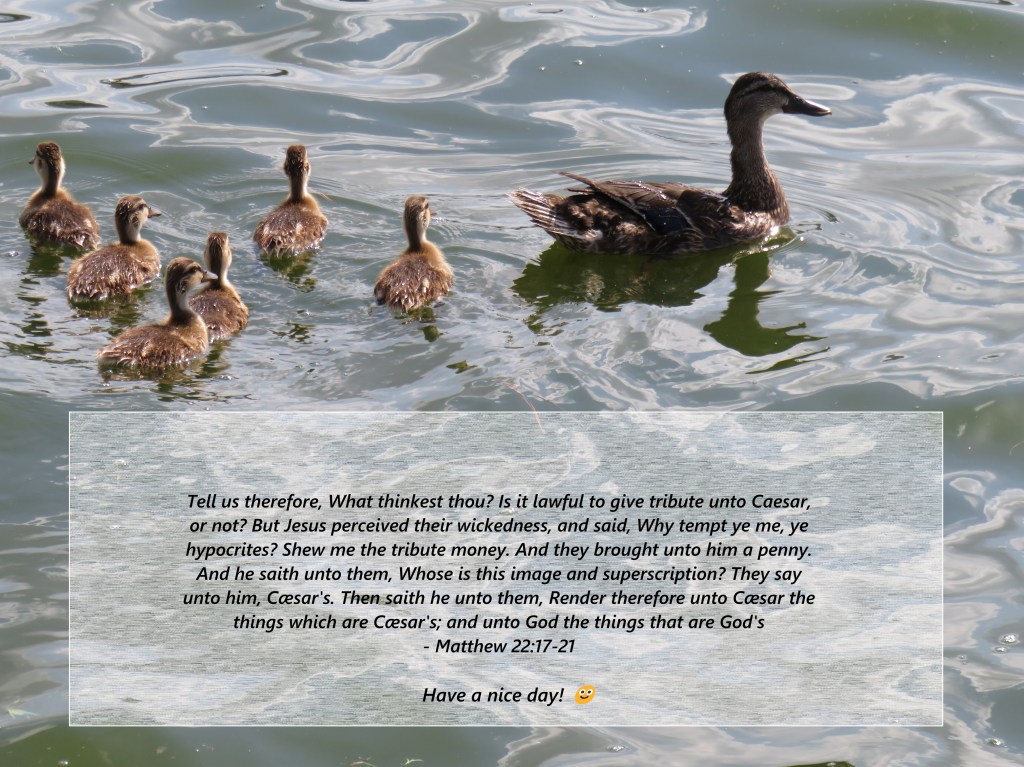
Tell us therefore, What thinkest thou? Is it lawful to give tribute unto Caesar, or not? But Jesus perceived their wickedness, and said, Why tempt ye me, ye hypocrites? Shew me the tribute money. And they brought unto him a penny. And he saith unto them, Whose is this image and superscription? They say unto him, Cæsar’s. Then saith he unto them, Render therefore unto Cæsar the things which are Cæsar’s; and unto God the things that are God’s
– Matthew 22:17-21
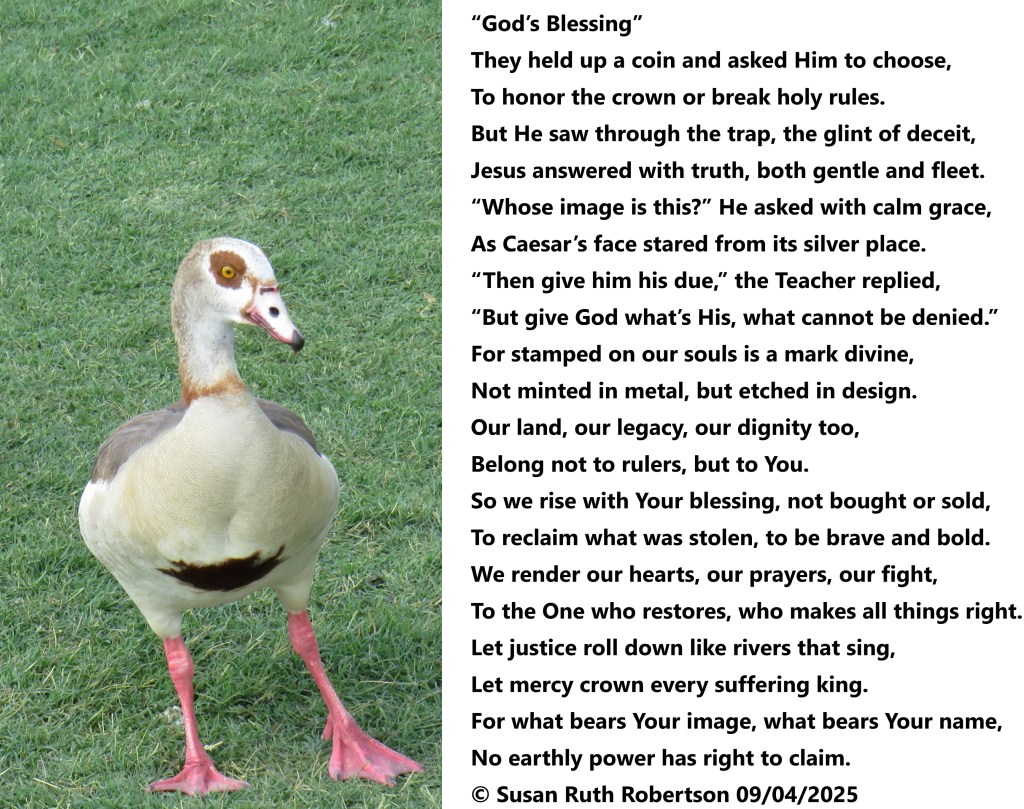
This is one of the most profound moments of spiritual and political discernment in the Gospels. Jesus is being tested, cornered by those who hope to trap Him into either defying Roman authority or alienating the Jewish people. But His response transcends the trap entirely. Jesus doesn’t deny the legitimacy of civic responsibility. He acknowledges Caesar’s image on the coin, implying that taxes belong to the realm of earthly governance. But He pivots, brilliantly, to a deeper truth: while Caesar may claim coins, God claims hearts. What bears God’s image (Genesis 1:27: So, God created mankind in his own image, in the image of God he created them; male and female he created them.)? Humanity itself. So, we are to render our very selves to God. Knowing what belongs to God, land, legacy, dignity, and refusing to let earthly powers claim what is sacred.
 "Only Life Changes"