
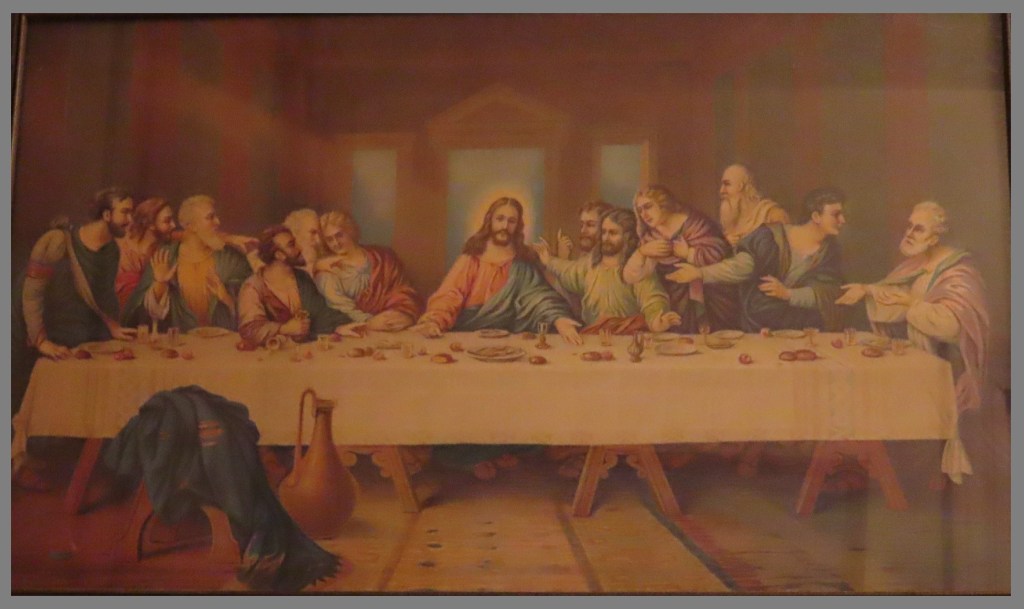
The Synoptic Gospels present Jesus sharing the Passover meal as His last supper with the disciples. He reinterpreted the common elements of the celebration in the light of a new covenant. The unleavened bread became His body(Mark 14:22~While they were eating, Jesus took bread, and when he had given thanks, he broke it and gave it to his disciples, saying, “Take it; this is my body.”) and the wine became His blood (Mark 14:23-26 ~ Then he took a cup, and when he had given thanks, he gave it to them, and they all drank from it. “This is my blood of the covenant, which is poured out for many,” he said to them. “Truly I tell you, I will not drink again from the fruit of the vine until that day when I drink it new in the kingdom of God.” When they had sung a hymn, they went out to the Mount of Olives.)
Customarily, the head of a Jewish household would explain each of the elements of the Passover meal. When explaining the bread, He would announce. This is the bread of affliction which our ancestors ate when they came from the land of Egypt.” He was not suggestion that it was the literal bread eaten by their ancestors, which was by then over 1,000 years old, but that it represented the bread their ancestors ate. This was one way Jewish people could identify with their ancestors whom God had first redeemed from captivity.
The head of the household normally blessed the bread and wine at other meals as well, but at Passover, when four cups of red wine were drunk, he would lift the cup a hand~breadeth above the table and recite a special blessing. Jewish men normally sat in chairs for meals, but they reclined on couches in typical Greek fashion when eating at banquets like the Passover. With their feet pointed away from the center of the room (When one of the Pharisees invited Jesus to have dinner with him, he went to the Pharisee’s house and reclined at the table. A woman in that town who lived a sinful life learned that Jesus was eating at the Pharisee’s house, so she came there with an alabaster jar of perfume. As she stood behind him at his feet weeping, she began to wet his feet with her tears. Then she wiped them with her hair, kissed them and poured perfume on them. Luke 7:36-38) and their heads more toward the center(One of them, the disciple whom Jesus loved, was reclining next to Jesus. John 13:23) they generally reclined on one elbow, using the other arm to reach the food on the table beside them.
Jesus remarked about the “blood of the new covenant” {“You heard me say, ‘I am going away and I am coming back to you.’ If you loved me, you would be glad that I am going to the Father, for the Father is greater than I. John 14:28}looked back when God redeemed Israel from Egypt {Moses then took the blood, sprinkled it on the people and said, “This is the blood of the covenant that the LORD has made with you in accordance with all these words.” Exodus 24:8}. By His blood being “shed for many,” Jesus possibly alluded to the suffering Servant pouring out His life (Therefore I will give him a portion among the great, and he will divide the spoils with the strong, because he poured out his life unto death, and was numbered with the transgressors. For he bore the sin of many, and made intercession for the transgressors. Isaiah 53:12). He saw Himself as redeeming His people by His own death.
Jewish people customarily finished, their meal by singing more psalms from the (Hallel~a portion of the service for certain Jewish festivals, consisting of Psalms 113–118~ comprise an important unit called the Hallel, which in Hebrew means “praise.” Composed after the exile, these six psalms are recited together by observant Jews during some of the major holidays on the Jewish calendar.). Likewise Jesus disciples sang “a hymn” (Mark 14:26~When they had sung a hymn, they went out to the Mount of Olives.) before departing for Gethsemane, where they would in the end desert Jesus
 "Only Life Changes"